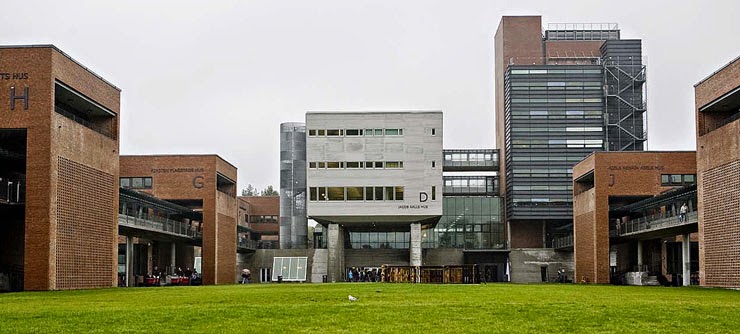
Murdoch University Australia

Murdoch University is a state funded university situated in Perth, Western Australia with grounds likewise in Singapore and Dubai. It started operations as the state's second college in 1973, and acknowledged its first understudies in 1975. Its name is taken from Sir Walter Murdoch (1874–1970), the Founding Professor of English and previous Chancellor of the University of Western Australia.
Murdoch University in Perth, Western Australia, has an advantageous notoriety as one of Australia's top showing and examination colleges. A notoriety bolstered by Professor Duane Varan turning into the latest beneficiary of the Federal Governmentand#8217;s, Australian University Teacher of the Year 2001, and, the foundation of the United Nations Environmental Institute (one of just three on the planet) on Murdochand#8217;s principle grounds. Add this to an adaptable scholarly structure and phenomenal understudy administrations and you will discover Murdoch the best begin to your future.
The University is arranged just 15 minutes (9 miles) drive south of the middle of Perth, the capital city of Western Australia, and 10 minutes (5 miles) from the port city of Fremantle. Its grounds, which is flawlessly finished with Australian local trees and bushes, is a center point of movement, life and fun and gives a perfect domain to meet different understudies from Australia and everywhere throughout the world.
With an understudy populace of 12,000, including 1,500 universal understudies from more than 50 nations, Murdoch is sufficiently little to bolster superb staff understudy relations, yet sufficiently huge to give stateand#64979;of-the-workmanship offices, incredible understudy administrations and a far reaching scope of Undergraduate, Postgraduate and Research programs. College access is likewise accessible through establishment learns at Murdoch College, which is placed on the Universityand#8217;s grounds. This gives the ideal pathway into an energizing degree at Murdoch Universit

The University of Canterbury New Zealand


The University of Canterbury (Māori: Te Whare Wānanga o Waitaha; postnominal shortening Cantuar. alternately Cant. for Cantuariensis, the Latin name for Canterbury) in Christchurch is New Zealand's second most seasoned college. Established in 1873 by educators Charles Cook (Mathematics, St John's College, Cambridge), Alexander Bickerton (Chemistry and Physics, School of Mining, London), and John Macmillan Brown (Balliol College, Oxford), it works its primary grounds in the suburb of Ilam. The college offers degrees in Arts, Commerce, Education (physical instruction), Engineering, Fine Arts, Forestry, Health Sciences, Law, Music, Social Work, Speech and Language Pathology, Science, Sports Coaching and Teaching.

The University began in 1873 in the core of Christchurch as Canterbury College, the first constituent school of the University of New Zealand. It turned into the second establishment in New Zealand giving tertiary-level training (after the University of Otago, built in 1869), and the fourth in Australasia.
The Canterbury Museum and Library and Christ's College, disappointed with the condition of advanced education in Canterbury, had both worked towards setting up Canterbury College.[2] In 1933, the name changed from Canterbury College to Canterbury University College. In 1957 the name changed again to the present University of Canterbury.
Until 1961, the University structured piece of the University of New Zealand (UNZ), and issued degrees in its name. That year saw the disintegration of the government arrangement of tertiary training in New Zealand, and the University of Canterbury turned into an autonomous University granting its own degrees. Upon the UNZ's end, Canterbury Agricultural College turned into a constituent school of the University of Canterbury, as Lincoln College.[3] Lincoln College got to be autonomous in 1990 as a full college in its own privilege.
Over the period from 1961 to 1974, the college grounds moved from the middle of the city to its much bigger current site in the suburb of Ilam. The neo-gothic structures of the old grounds turned into the site of the Christchurch Arts Center, a center point for expressions, specialties and excitement in Christchurch.
In 2004, the University experienced rebuilding into four Colleges and a School of Law, controlling various schools and offices (however various divisions have association in cross-instructing in various scholastic employees). For a long time the college worked nearly with the Christchurch College of Education, prompting a full merger in 2007, securing a fifth Colle

University of Liverpool United Kingdom


The University of Liverpool is a state funded college situated in the city of Liverpool, England. Established as a school in 1881, it picked up its regal contract in 1903 with the capacity to recompense degrees and is likewise known to be one of the six unique "red block" community colleges. It embodies three workforces sorted out into 35 divisions and schools. It is an establishing individual from the Russell Group of examination escalated colleges, the N8 Group for exploration coordinated effort and the University Management school is AACSB certify.

The college has created nine Nobel Prize champs and offers more than 230 first degree courses over 103 subjects. It was the world's first college to make offices in Oceanography, urban configuration, structural engineering, and organic chemistry at the Johnston Laboratories. In 2006 the college turned into the first in the UK to secure a free college in China making it the world's first Sino-British college. It has a yearly turnover of £410 million, including £150 million for exploration.
Alumni of the University are styled with the post-ostensible letters Lpool, to demonstrate the organization.
The University was built in 1881 as University College Liverpool, letting it be known's first understudies in 1882. In 1884, it got to be a piece of the government Victoria University. In 1894 Oliver Lodge, an educator at the University, made the world's first open radio transmission and after two years took the first surgical X-beam in the United Kingdom. The Liverpool University Press was established in 1899, making it the third most seasoned college squeeze in England. Understudies in this period were honored outer degrees by the University of London.
§University status
Taking after a Royal Charter and Act of Parliament in 1903, it turned into a free college with the privilege to present its own particular degrees called the University of Liverpool. The following few years saw real advancements at the college, including Sir Charles Sherrington's disclosure of the neurotransmitter and William Blair-Bell's work on chemotherapy in the treatment of tumor. In the 1930s to 1940s Sir James Chadwick and Sir Joseph Rotblat made real commitments to the improvement of the nuclear bomb. From 1943 – 1966 Allan Downie, Professor of Bacteriology, was included in the annihilation of smallpox.
In 1994 the college was an establishing individual from the Russell Group, a coordinated effort of twenty driving exploration concentrated colleges, and also an establishing individual from the N8 Group in 2004. In the 21st century physicists, architects and professionals from the University of Liverpool were included in the development of the Large Hadron Collider at CERN, dealing with two of the four indicators in the LHC.
The college has delivered nine Nobel Prize victors, from the fields of science, medicine,economics and peace. The Nobel laureates incorporate the doctor Sir Ronald Ross, physicist Charles Barkla, the physiologist Sir Charles Sherrington, physicist Sir James Chadwick, scientific expert Sir Robert Robinson, scientist Har Gobind Khorana, physiologist Rodney Porter, economist Ronald Coase and physicist Joseph Rotblat. Sir Ronald Ross was likewise the first British Nobel laureate in 1902.The University is additionally connected with Professors Ronald Finn and Sir Cylil Clarke who together won the Lasker-DeBakey Clinical Medical Research Award in 1980 and Sir David Weatherall who won the Lasker-Koshland Special Achievement Award in Medical Science in 2010. These Lasker Awards are prominently known as America's Nobels.
Over the 2013/2014 scholarly year, individuals from staff partook in various strikes as a consequence of climbs after staff were offered a pay ascent of 1% which unions likened to a 13% pay cut subsequent to 2008. The strikes were bolstered by both the college's Guild of Students and the National Union of Students. A few understudies at the college upheld the strike, possessing structures on grounds.
The college is essentially based around a solitary urban grounds pretty nearly five minutes stroll from Liverpool City Center, at the highest point of Brownlow Hill and Mount Pleasant. Possessing 100 sections of land, it contains 192 non-private structures that house 69 address theaters, 114 showing zones and cutting edge research offices.
The primary site is partitioned into three personnel: Health and Life Sciences; Humanities and Social Sciences; and Science and Engineering. The Veterinary Teaching Hospital (Leahurst) and Ness Botanical Gardens are in light of the Wirral Peninsula. There was some time ago a sea life science exploration station at Port Erin on the Isle of Man until it shut in 2006.
Fifty-one private structures, on or close to the grounds, give 3,385 rooms to understudies, on a cooked or cooking toward oneself premise. The centerpiece of the grounds remains the University's unique red block fabricating, the Victoria Building. Opened in 1892, it has as of late been restored as the Victoria Gallery and Museum, complete with bistro and exercises for school visits Victoria Gallery and Museum, University of Liverpool.
In 2011 the college made a pledge to put £660m into the 'Understudy Experience', £250m of which will apparently be spent on Student Accommodation. Declared so far have been two expansive On-Campus lobbies of homes (the first of which, Vine Court, opened September 2012, new Veterinary Science offices, and a £10m restoration of the Liverpool Guild of Students. New Central Teaching Laboratories for physical science, earth sciences, science and archaic exploration were opened in harvest .

The University of Helsinki Finland


The University of Helsinki (Finnish: Helsinki yliopisto, Swedish: Helsingfors university, Latin: Universitas Helsingiensis, abbreviated UH) is a university located in Helsinki, Finland since 1829, but was founded in the city of Turku (in Swedish Åbo) in 1640 as the Royal Academy of Turku, at that time part of the Swedish Empire. It is the oldest and largest university in Finland with the widest range of disciplines available. Around 36,500 students are currently enrolled in the degree programs of the university spread across 11 faculties and 11 research institutes.

As of August 1, 2005, the University complies with the standards of the Europe-wide Bologna Process and offers Bachelor, Master, Licenciate, and Doctoral degrees. Admission to degree programmes is usually determined by entrance examinations, in the case of bachelor degrees, and by prior degree results, in the case of master and postgraduate degrees. Entrance is particularly selective (circa 15% of the yearly applicants are admitted). It has been ranked a top 100 university in the world according to the 2012 QS, Times Higher Education and the Academic Rankings of World Universities.
The university is bilingual, with teaching provided both in Finnish and Swedish. Teaching in English is extensive throughout the university at Master, Licentiate, and Doctoral levels, making it a de facto third language of instruction.
Remaining true to its traditionally strong Humboldtian ethos, the University of Helsinki places heavy emphasis on high-quality teaching and research of a top international standard.[6] It is a member of various prominent international university networks, such as Europaeum, UNICA, the Utrecht Network, and is a founding member of the League of European Research Universities.
The first predecessor of the university, The Cathedral School of Åbo, was presumably founded in 1276 for education of boys to become servants of the Church. As the university was founded in 1640 by Queen Christina of Sweden (1626–1689) in Turku (Sw. Åbo), as the Åbo Kungliga Akademi (Latin: Regia Academia Aboensis), the senior part of the school formed the core of the new University, while the junior year courses formed a grammar school. It was the third university founded in the Swedish Empire, following Uppsala University and the Academia Gustaviana in Dorpat (predecessor to the University of Tartu in Estonia).

University of Agder Norway

College of Agder is a state funded college with grounds in Kristiansand and Grimstad, Norway. The organization was secured as a college school in 1994 with the merger of six universities and was conceded its present status as a college in 2007, however its scholarly action dates as far back as 1839. It is one of eight colleges in Norway; the other seven are the University of Oslo, the University of Tromsø, the University of Stavanger, the University of Bergen, the Norwegian University of Life Sciences in Ås, the Norwegian University of Science and Technology in Trondheim and the University of Nordland in Bodø. 
The thought of a college in the Agder district is not totally new. In his brief time as leader of the union of Denmark–Norway, Johann Friedrich Struensee anticipated transforming the University of Copenhagen. He gave Bishop Johann Ernst Gunnerus of Trondheim the errand of growing more point by point plans. Gunnerus introduced a proposition in 1771 in which he recommended building another college in Norway, and setting it in Kristiansand. 
The intentions in proposing Kristiansand as a college town have been faced off regarding. Notwithstanding, the thought was soon disposed of as arranging started for the first Norwegian college. In 1811, a determination was gone to secure Norway's first college in Christiania (Oslo). 
Indeed without a college in the area, and as the requirement for better taught representatives climbed, a few littler universities were created all through the Agder locale. The principal, Kristiansand Teacher Training College was initially established at Holt, Aust-Agder in 1839, making it one of the most seasoned foundations of advanced education in Norway. It was trailed by Arendal College of Nursing (1920), Agder Music Conservatory (1965), Agder Regional College of Technology (1967), Agder Regional College (1969) and Kristiansand College of Nursing (1976). 
Agder University College was created by a merger in 1994, when the six open provincial schools in the Agder regions turned into one establishment. The University College got full college accreditation and turned into the University of Agder on 1 September 2007. In 2009, the University of Agder has more or less 8,000 understudies, 1000 workers and a yearly plan of around 800 million NOK (140 Million Us$). 
Today, the procedure of solidifying the University proceeds. In 2010 the University's exercises in Aust Agder (Grimstad and Arendal) will head onto UiA's new grounds in Televeien in Grimstad, and exercises in Kristiansand will be focused on the grounds at Gimle.

Central European University Hungary

Central European University (CEU) is a graduate-level, English-dialect college authorize in the U.S. also Hungary and found in Budapest. The college offers degrees in the sociologies, humanities, law, open strategy, business administration, ecological science, and math. 
CEU has more than 1500 understudies from 100 nations and 300 employees from more than 30 nations. CEU was established by humanitarian George Soros, who has given an enrichment of US$880 million, making the college one of the wealthiest in Europe.
CEU has two schools, including the School of Public Policy and CEU Business School, 14 scholarly divisions, and 17 examination focuses. 
CEU developed from a progression of addresses held at the IUC in Dubrovnik, Yugoslavia, (now Croatia). In the Spring of 1989, as chronicled change was gathering energy in the area the requirement for another, free, universal college was being considered. The minutes of the get-together held in April 1989 records a talk among researchers, for example, Rudolf Andorka, Péter Hanák, Márton Tardos, István Teplán, Tibor Vámos and Miklós Vásárhelyi from Budapest, William Newton-Smith and Kathleen Wilkes from Oxford, Jan Havranek, Michal Illner and Jiří Kořalka from Prague, Krzysztof Michalski and Włodzimierz Siwiński from Warsaw. 
The University was established in 1991 because of the fall of the Socialist Bloc. The establishing vision was to make a college committed to looking at the contemporary difficulties of "open social orders" and democratization. The starting point was to make a Western-demonstrated yet notably Central European organization that would cultivate between territorial collaboration and teach another corps of local pioneers to help introduce majority rule moves over the district. It was initially found in Prague, but since of "political and money related clash between its organizer and Czech government" spoke to by Vaclav Klaus it moved to grounds in Budapest. 
In its second decade, CEU widened its center from provincial to worldwide, with an exceptional accentuation on majority rules system advancement and human rights as far and wide as possible. It has since added to a unique scholarly approach, joining local studies with a global viewpoint, accentuating similar and interdisciplinary research to create new grant and arrangement activities, and to advance great administration and the tenet of law. CEU has developed its effort and money related help projects to certain zones of the creating scene. 
CEU started the area's first graduate degree programs in sex studies and natural sciences. The CEU Center for Media, Data and Society is the main focus of examination on media, correspondence, and data arrangement in the district. 

The University of Oslo Norway

The University of Oslo, earlier The Royal Frederick University , is the most established and biggest college in Norway, placed in the Norwegian capital of Oslo. The college is perceived as one of Northern Europe's most prestigious colleges. The Academic Ranking of World Universities has positioned it the 67th best college on the planet. 
The college has give or take 27,700 understudies and utilizes around 6,000 individuals. Its staffs incorporate (Lutheran) Theology (Norway's state religion since 1536), Law, Medicine, Humanities, Mathematics, characteristic sciences, sociologies, Dentistry, and Education. The college's unique neoclassical grounds is spotted in the focal point of Oslo; it is as of now possessed by the Faculty of Law. The vast majority of the college's different personnel are placed at the more up to date Blindern grounds in the rural West End. The Faculty of Medicine is part between a few college healing centers in the Oslo region. 
The college was established in 1811 and was designed according to the University of Copenhagen and the as of late settled University of Berlin. It was initially named for King Frederick VI of Denmark and Norway, and got its present name in 1939. The college is casually otherwise called Universitetet ("the college"), having been the main college in Norway until 1946, and was ordinarily alluded to as "The Royal Frederick's" before the name change. 
The University of Oslo is home to five Nobel Prize winners.The Nobel Peace Prize was granted in the college's Atrium from 1947 to 1989.Since 2003, the Abel Prize is honored in the Atrium. 
In 1811, a choice was made to make the first college in the Dano-Norwegian Union, after an effective fight which brought about a concurrence with King Fredrik VI. Fredrick consented to the foundation of an establishment that he had prior accepted may energize political-separatist inclinations. In 1813, The Royal Fredrik's University was established in Christiania, a little city amid that time. Circumstances then changed drastically one year into the initiation of the college, as Norway announced freedom and received its own particular constitution. Nonetheless, autonomy was to some degree confined, as Norway was obliged to go into an administrative union with Sweden in light of the result of the War of 1814. Norway held its own particular constitution and autonomous state foundations, whilst illustrious force and remote issues were imparted to Sweden. During an era when Norwegians dreaded political mastery by the Swedes, the new college turned into a key foundation that added to Norwegian political and social autonomy. 
The primary capacity of The Royal Frederick University was to instruct another class of (higher) common hirelings. Despite the fact that Norway was in an authoritative union with Sweden, it was a sovereign state, and required instructed individuals to run it. Common hirelings were required, and also parliamentary agents and pastors. The college likewise turned into the inside for an overview of the nation a review of national society, dialect, history and people customs. The staff of the college endeavored to attempt an extensive variety of down to earth errands vital for building up the base basic to a cutting edge society. At the point when the union with Sweden was broken up in 1905, the college got to be essential for delivering very taught men and ladies who could serve as specialists in a general public which set expanding accentuation on guaranteeing that all its nationals appreciate an existence of poise and security. Training, wellbeing administrations and open organization were among those fields that enlisted work force from among the college's graduates. In 1939, the college was renamed the University of Oslo and it remained Norway's just college until 1946. . 
All through the 1800s, the college's scholastic orders got to be more particular. One of the real changes in the college came amid the 1870s when a more prominent accentuation got to be set upon exploration. The administration of the college got to be more proficient, scholastic subjects were improved and the types of instructing developed. Disciplines got to be more particular and traditional training went under expanding weight.